Paris Peace Forum 2026 | 10-11 Nov.

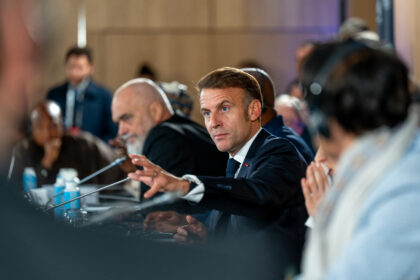
The Children First Declaration was launched on November 10, 2026 during the Child Summit at the ninth edition of the Paris Peace Forum, the first of this scale, to be held in more than 30 years.
Read the full text below :
The Children First Declaration reaffirms children’s rights as human rights, and that these rights need to be protected and upheld, in accordance with the Convention on the Rights of the Child, which serves as the international standard for the promotion and protection of children’s rights.
1. Investing in the promotion and the protection of children’s rights and wellbeing remains the most powerful investment any society can make. Children who are healthy, nourished, supported, protected, whose legal existence and rights are recognized through civil registration, and who grow up in safe and caring environments are better equipped to develop, thrive, learn, succeed, express their opinions and participate to build stronger communities and more resilient societies as agents of positive change. Progress made in child health over recent decades is not guaranteed to continue. Almost five million children are still dying before their fifth birthday every year, while preventable diseases remaining among the leading causes of mortality. One in four children under five lives in severe food poverty. Children are disproportionately affected by conflict and persecution, and represent 40% of the world's forcibly displaced people. Close to two million babies are stillborn and around 260 000 women die each year from complications in pregnancy and childbirth. Across the world, failures to protect children online and offline constrain the potential of an entire generation, while digital environments increasingly shape how children learn, relate and develop, redefining both the opportunities available to them and the risks they face.
2. While the efficiency of this investment is well established the cost of inaction builds up over time and the window of opportunity is narrow. Investment improves survival, nutrition, learning, and healthy development - while reducing losses that subsequent expenditures cannot fully rectify - and retains its value whether the future brings growth, stagnation, or crisis. In an era of scarcity, debt distress, pressure on international cooperation, conflicts and climate shocks, investing in a child’s earliest years is among the most legitimate uses of resources: it saves lives, builds future human capital and prevents irreversible losses. A child harmed by preventable diseases, abuse, including sexual and gender-based violence and discrimination, or whose developmental trajectory is disrupted by forced displacement or an unsafe digital environment can carry the consequences for life. Deprivation in the “first thousand days” can have lasting consequences for brain development that are difficult to reverse fully through later spending - including in education, training or medical assistance. Care must begin early, with particular attention for the “first thousand days”, when the foundations for cognitive development, attachment and socioemotional regulation are formed, and must continue throughout childhood and adolescence. Quality education, physical and mental health, sexual and reproductive health, and healthy digital environments, agency and belonging shape the transition to adulthood. These factors contribute to unlocking the potential of a rising generation - especially in countries with fast-growing young populations - comprised of a skilled and innovative workforce and active civic participants able to drive shared prosperity and build resilient societies.
3. This shared ambition is country-led. A strong focus on early-life investment can provide a common standard for long-term prosperity, while reflecting unique national strengths, contexts and priorities. Political leadership along with strong, coordinated and country-led implementation mechanisms can help to align public budgets, external financing and service delivery with outcomes achieved for children and adolescents. Anchored in international human rights standards and national priorities, a credible child agenda can guide public policies and help shaping the future Sustainable Development Goals’ (SDGs) agenda for the next generation.
4. Halving major shortfalls across the five domains of child wellbeing by 2045 is an ambitious but achievable goal:
5. Progress towards this ambition requires country-led reference points for child outcomes. Limited in number, country-led reference points can help governments define their national priorities, monitor progress over time and align budgets, external financing and delivery systems with improved results for the most vulnerable children, as well as their caregivers. These reference points would cover the core foundations of child wellbeing, addressing civil registration deficiencies, maternal, neonatal and under-five mortality; stunting among children under five; severe child food poverty; impediments to child development and learning; and child, early and forced marriage – with each country complementing them with indicators for later childhood and adolescence in line with national contexts and priorities, and international obligations. Each country defines its own pathway, based on its institutions and capacities. Taken together, these reference points can support the next phase of national and subnational work on child health and development. Collective learning and international solidarity can build on universal human rights standards, evidence and accountability frameworks, primarily the UN Convention on the Rights of the Child, supported by UNICEF’s unique mandate, and other UN agencies such as UNESCO, WHO and WFP, reinforced by other regional initiatives.
6. Delivery impacts progress and outcomes. National targets matter only if quality systems can consistently reach children at scale. Achieving this requires investing in frontline capacity, implementation strategies, regulations and robust data systems, alongside reliable access to essential commodities and tools. Progress is accelerated by high-level political leadership, coordinated action across ministries and mechanisms that enable civil society organizations, communities, the world of work, philanthropies, the media and the private sector to contribute to governance, delivery, problem-solving and innovation, providing children with safe, inclusive and accessible environments to participate meaningfully in the policies and initiatives that affect them. Across all five domains, technology can accelerate the deployment of proven solutions, easing constraints of distance, cost, capacity and access, and improve the reach, continuity and quality of essential services. At the same time, technology can be misused to commit or facilitate abuses and violations of children’s rights. Technology, when designed and used to ensure children’s rights, safety and developmental needs - in particular girls’ rights and needs - and when made safe and age-appropriate by default, can also expand their opportunities to learn, create and participate.
At a time when the world is struggling to find common ground, prioritizing children and investing in them early stands as an imperative to protect their rights and development, preserve human capital, and strengthen resilience across generations.
Full list of signatories of the Declaration as of November 10, 2026 :
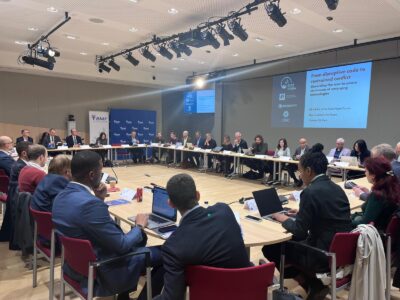 Publication
Toward a Digital Ceasefire?
 Publication
Unlocking Public-Interest Research on Cyber Capable AI
 Publication
Bridging the Evidence Gap on AI Misuse in Cyberspace
 Publication
 – White Paper “Bringing society back in”