Paris Peace Forum 2026 | 10-11 Nov.
D-34
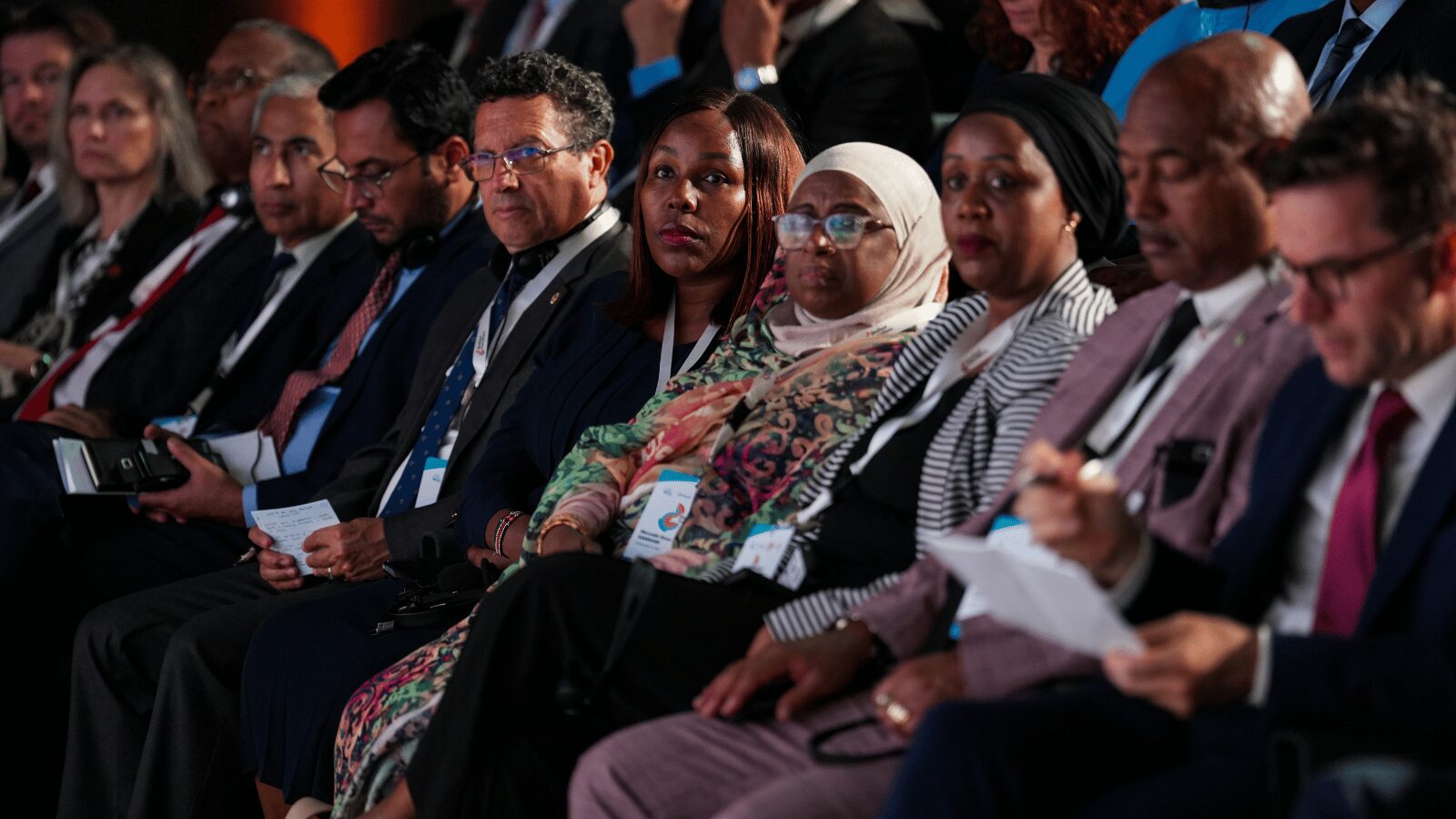
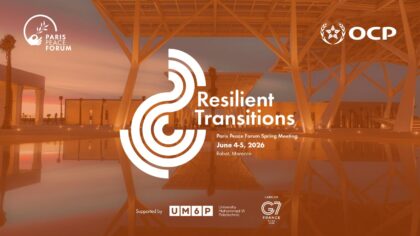
Rabat, May 5, 2026 - The Paris Peace Forum concluded its Spring Meeting today, held in Rabat in partnership with OCP Group and supported by Mohammed VI Polytechnic University, under the theme “Resilient Transitions”. Over the course of two days, global leaders, international organizations, researchers, investors and civil society actors gathered to implement actions that can foster transitions all the while withstanding/ that can withstand geopolitical, economic, climate-related, and social shocks.
Labeled in the context of the French presidency of the G7, this Spring Meeting served as a working session in line with the Africa Forward Summit in Nairobi and prior to the G7 Summit in Evian, and aimed at informing international discussions through concrete proposals resulting from North-South and South-South dialogue. The program, aligned with the G7’s priorities, was structured around three themes: food systems, prioritizing children, and transition energy and minerals.
“This meeting has led to clear conclusions: in the face of geopolitical shocks such as the closure of the Strait of Hormuz, we must protect the dynamics of growth and modernization that are driving Africa toward greater development in agriculture, health and critical minerals. The path to this regained sovereignty lies in the diversification of supplies and partnerships and in connecting the continent’s energy and resources”, declared Justin Vaïsse, founder and director general of the Paris Peace Forum.
Two days to turn resilience into a call to action
Held at the Mohammed VI Polytechnic University campus, the Spring Meeting featured a blend of working sessions, roundtables, and high-level plenary sessions. The first day, June 4th, was dedicated to technical discussions on the three priorities, while the second day, June 5th, provided an opportunity to consolidate progress and convey key messages from a multilateral - and even polylateral – perspective, which involved actors other than States.
The meeting opened on 4 June with a speech by H.E. Leila Benali, minister for Energy transition and Sustainable development of the Kingdom of Morocco, who highlighted the importance of the theme of "Resilient transitions" for Morocco, Africa and the international development agenda. She stated: “When I was asked to deliver this opening address, I was immediately drawn to the theme of resilient transitions, because in Morocco, in Africa, we know what resilience means, and we know what transitions mean.”
During the opening session on 5 June, the Forum also had the honour of hosting Philippe Lalliot’s first official address as France’s new ambassador to Morocco, who declared that: “We are here in the right place, at the right time and in good company to reflect precisely on the ways and means by which we can together ensure that these major upheavals, these transitions, are addressed with concrete, realistic and appropriate solutions, thereby transforming our hopes and ambitions into projects and actions.”
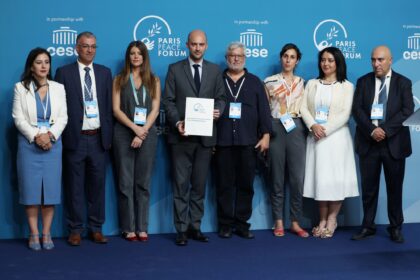
The Spring Meeting 2026 brought together numerous prominent figures from governments, international organizations, the private sector, the research community, the cultural sector, and civil society, including H.E. Leila Benali, minister for Energy transition and Sustainable development of the Kingdom of Morocco, H.E. Ahmed El Bouari, minister of Agriculture, Maritime fisheries, Rural development and Water and Forest of the Kingdom of Morocco, Philippe Lalliot, ambassador of the French Republic to the Kingdom of Morocco, Fatiha El Moudni, mayor of Rabat, Estelle Youssouffa, Secretary of the Foreign Affairs Committee of the National Assembly, Karim Ben Cheikh, Member of Parliament for the 9th Constituency of French Citizens Living Abroad, Hicham El Habti, president of the Mohammed VI Polytechnic University, Hajar Alafifi, CEO of OCP Africa, Laura Bill, representative of the UNICEF in Morocco, Catherine Bonnaud, director of the French Development Agency in Morocco, Rabiaa Marhouch, editor, writer and scholar, Hajar Azell Chokairi, writer and cultural entrepreneur, Yusra Madrini, Olympic swimmer and Goodwill ambassador for UNHCR, alongside several representatives from the World Bank Group, the European Commission, the EBRD, the OECD, the UNDP, AFRA, GAIN, INNOVX, and OCP Group.
Three key themes and the heart of the discussions
The discussions helped identify clear priorities around three key themes. Regarding food systems, participants called for accelerating Africa’s agricultural transformation by aligning financing, innovation, and on-the-ground projects, particularly through the ATLAS MAVA Forum. On children, the discussions underscored that investing in future generations is a decisive driver of resilience, stability and prosperity, at the heart of the Child Priority Framework initiative led by the Paris Peace Forum. Finally, on transition minerals, the debates highlighted the need for value chains that are more responsible, more equitable, and more firmly rooted in producing countries in the Global South.
Concrete proposals to inform the G7’s work
Beyond the discussions, the Spring Meeting helped advance several deliverables intended to inform the G7’s work. A strategic note on responsible transition minerals was released on June 4th, advising the G7’s work on financing more sustainable, equitable, and resilient value chains. This note builds on the actions of the Working Group on Financing Responsible Transition Minerals, convened by the Paris Peace Forum, whose recommendations were presented during the session dedicated to financing responsible minerals value chains.
The Spring Meeting also marked the launch of the second edition of the ATLAS Investment Barometer 2026, the Paris Peace Forum’s annual barometer dedicated to tracking public, private and development finance flows to African agriculture. This new report highlights a worrying finding: Africa currently receives only 3% of global agricultural investment, which remains 47% below the target of $100 billion by 2030. Whilst development finance has risen sharply, private investment continues to decline, by 2% per year, whilst emerging cuts in official development assistance in 2025–2026 risk undermining recent progress. Closing this investment gap is an imperative that extends beyond the agricultural sector alone: investing in African food systems could help address 30–50% of global gaps related to the Sustainable Development Goals, from poverty and food insecurity to climate-related displacement.
Finally, discussions surrounding the Child Priority Framework have served to reaffirm the importance of placing investment in children at the heart of international development agendas. This momentum will continue with a high-level announcement due in the coming weeks, aimed at strengthening international mobilisation in support of children and future generations.
Taken together, these results reflect the ambition of the Spring Meeting: to make the Forum a platform for generating solutions, recommendations, and operational coalitions, beyond being a space for dialogue.
Next step : the 2026 Paris Peace Forum
The conclusions of this Spring Meeting will inform the work of the Paris Peace Forum ahead of its next annual session, to be held on November 10 and 11, 2026. They will also help shape priorities and coalitions for action around a common goal: making resilient transitions a driver of stability, sustainable prosperity, and international cooperation.
For any media enquiries, please contact: media@parispeaceforum.org
About the Paris Peace Forum: The Forum is a platform to originate, shape & share multi-actor responses towards global peace & sustainable prosperity. By convening key decision-makers and fostering collaboration between governments, international organizations, businesses, and civil society, we ensure that diplomacy is not just discussed but reinvented to meet the demands of a changing world. For more information, visit parispeaceforum.org