Paris Peace Forum 2026 | 11-12 Nov.
D-246
Paris, October 30, 2025 - The 8th edition of the Paris Peace Forum, which took place over two days on October 29 and 30, concluded on Thursday after high-level international discussions on peace, climate, and the impact of technological progress on people.
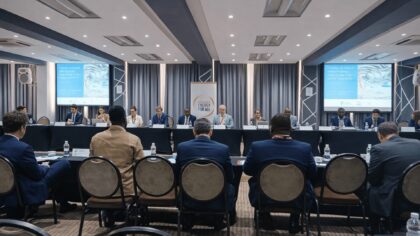
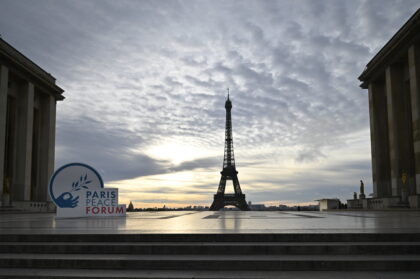
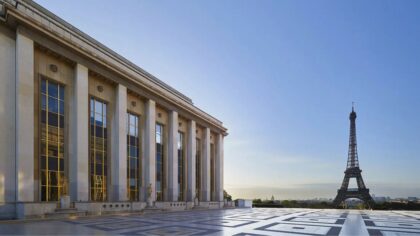
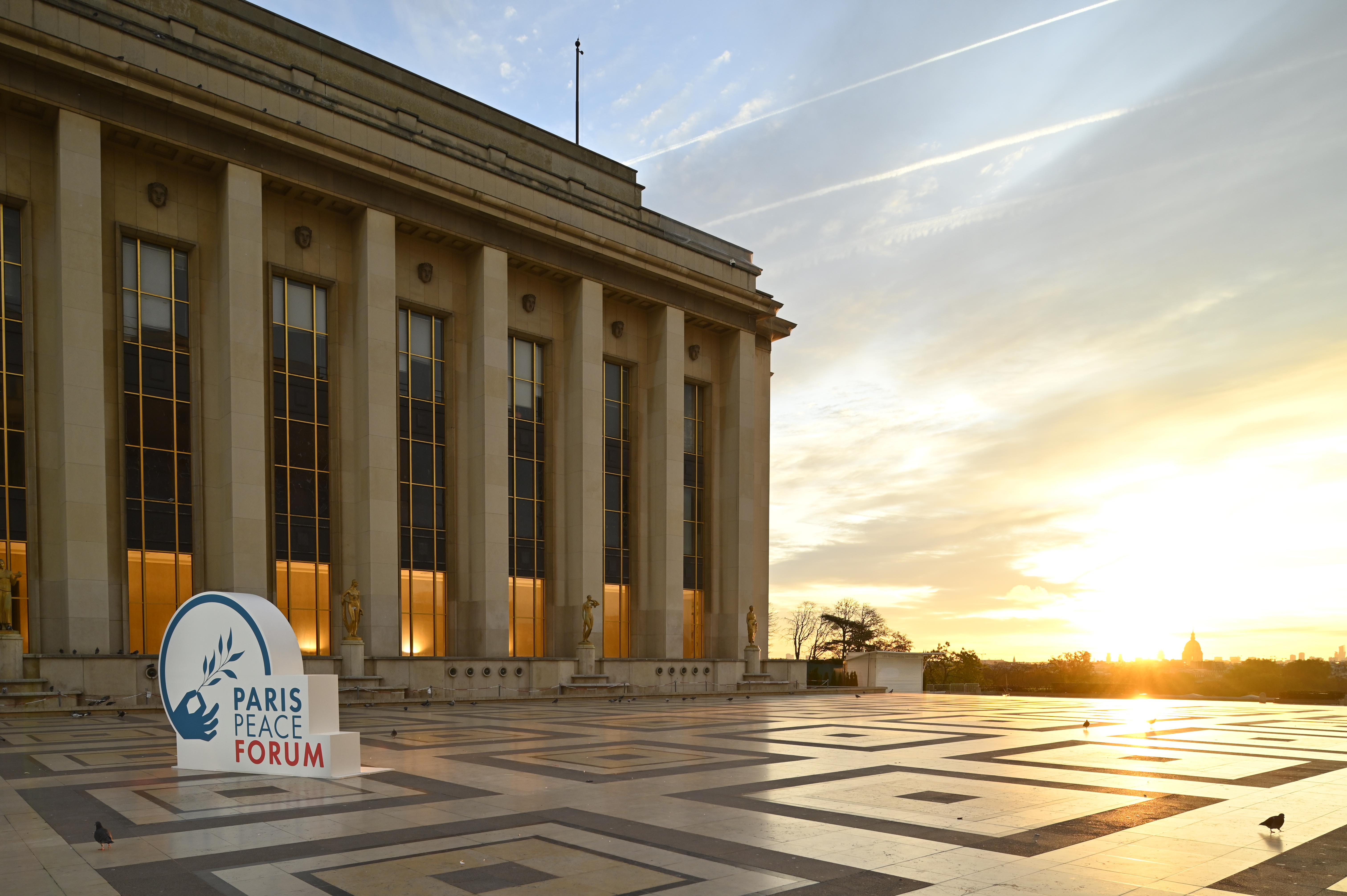
More than 15 heads of state and government and 25 ministers from around the world attended the Forum discussions at the Palais de Chaillot, in the premises of the Musée de l'Homme and the Musée de la Marine, at the foot of the Eiffel Tower. The theme, ‘New Coalitions for Peace, People and the Planet,’ brought together 500 speakers at 86 conferences and round tables, and 4,000 participants.
The second day was marked by debates on artificial intelligence, hopes for Israeli-Palestinian peace, the situation in Ukraine, the situation in the Great Lakes, and the future of humanitarian law. On this occasion, the Forum unveiled the list of ten projects it will support in 2026 as part of the SCUP programme.“The word that embodies the Forum is impact. When we look at a brutalised and chaotic world, it is not simply to analyse it: it is to take action, to bring together stakeholders with a view to transforming it”, said Justin Vaïsse, founder and director general of the Paris Peace Forum, during a final press conference.
On 29 October, several countries had announced funding for the International Fund for Public Interest Media (IFPIM), including France, which pledged €10 million, and Ghana, the first African country to provide financial support for this initiative. Additionally, countries from both the Global North and South have pledged to reduce methane emissions. This pledge, championed by Emmanuel Macron and Mia Mottley, the Prime Minister of Barbados, will be discussed at COP30 in Belém, Brazil, in November.
New Coalitions for Peace
As part of a ministerial conference in Paris to support peace and prosperity in the Great Lakes region, the Forum held a session on regional economic integration, a crucial vehicle for achieving lasting peace. Co-chaired by France and Togo, mediators of the African Union for the Great Lakes region, the main objective of this Paris conference is to mobilise the international community to respond to the humanitarian emergency in eastern Democratic Republic of the Congo and the region. It is also an opportunity to support the ongoing negotiation and mediation process led by the United States, Qatar and the African Union.
Other sessions focused on the situation in Gaza and the need to find a new diplomatic approach between Israelis and Palestinians, particularly through the consolidation of civil society.
A minute's silence was otherwise observed in solidarity with Sudan during the session entitled ‘Empowering youth to lead peacebuilding, social change, and cohesion’.
The importance of safeguarding international humanitarian law was also highlighted on the occasion of the 75th anniversary of the adoption of the Geneva Conventions. Spanish Foreign Minister José Manuel Albares, French Minister Jean-Noël Barrot, CIVIC Director Hichem Khadhraoui, EU Special Representative for Human Rights Kajsa Ollongren, and ICRC President Mirjana Spoljaric-Egger discussed the principles of international humanitarian law (IHL). They reiterated the importance of mobilising more States to join the initiative launched on 27 September 2024 by six States – including France – and the ICRC, aimed at galvanising political commitment to IHL. ‘The first steps towards peace are always humanitarian,’ Ms Spoljaric-Egger reminded the audience. She insisted: ‘We must treat human life as human life, regardless of which side you are on. That is the guarantee of returning to the path of peace.’
New Coalitions for the People
Stakeholders on artificial intelligence, including Professor, Co-President and Chief Scientific Officer at LawZéro Yoshua Bengio, Microsoft's Global Policy Director for AI and Cybersecurity Nicholas Butts, and former Prime Minister of New Zealand and Chair of the Christchurch Call Jacinda Ardern, discussed ways to strengthen AI security and the mechanisms for cooperation to establish best practices. ‘AI is a preventive tool, but it can also exacerbate the pathways to radicalisation,’ warned Ms Ardern. ‘It is important that industries, governments and societies engage with each other,’ added Mr Butts.
Regarding AI, the need to protect children and their cognitive and socio-emotional development was discussed with Cécile Aptel, Deputy Director at UNICEF; Michael Preston, Director of the Sesame Workshop Joan Ganz Cooney Centre; and Lauren Jonas, Head of Youth at OpenAI. Mathilde Ceroli, Scientific Director at everyone.ai (co-organisers of the session), concluded by summarising: ‘The more human-like AI seems, the more it creates a space conducive to emotional dependence. We have a responsibility to create experiences that are responsible and beneficial for teenagers.’
New Coalitions for the Planet
The other sessions focused on development, economic transformation and agriculture in Africa, as well as the use of minerals for a sustainable future.
During the closing ceremony, the Forum had the immense pleasure of announcing the 10 Scale-Up projects selected to be supported throughout 2026. The selected finalists are:
It is now officially a wrap! The Paris Peace Forum’s team thanks all speakers and participants for their presence and looks forward to next year’s edition.
For media enquiries, please contact media@parispeaceforum.org
About the Paris Peace Forum: The Forum is a platform to originate, shape & share multi-actor responses towards global peace & sustainable prosperity. By convening key decision-makers and fostering collaboration between governments, international organizations, businesses, and civil society, we ensure that diplomacy is not just discussed but reinvented to meet the demands of a changing world. For more information, visit parispeaceforum.org.
About the Musée de l’Homme: the Musée de l'Homme traces the evolution of humanity from prehistory to the present day. It offers visitors a journey through three questions: “Who are we?”, “Where do we come from?” and “Where are we going?” based on the results of research conducted by the museum's scientists. It houses remarkable prehistoric and anthropological collections displayed within its historic walls. Since reopening after renovation just ten years ago, the museum has tackled major social issues through its temporary exhibitions and dynamic cultural programming.
About the Musée National de la Marine: the Musée National de la Marine (National Maritime Museum) has one of the finest and oldest collections in the world, tracing more than 250 years of maritime and naval adventures. Under the supervision of the Ministry of the Armed Forces, it is a place of art and history, science and technology, human adventure and popular traditions, also committed to the major maritime issues of the 21st century. The National Maritime Museum is a network of museums located in five cities in France: Paris (Palais de Chaillot – Trocadéro), Brest, Port-Louis (Morbihan), Rochefort, and Toulon. This network structure enables it to maintain strong links with local maritime cultures and to promote an active policy of exhibitions and events, making this institution a living space for raising awareness of the challenges of the sea yesterday, today, and tomorrow.
About the Cité de l'Architecture et du Patrimoine: the Cité de l'Architecture et du Patrimoine is the custodian of an exceptional heritage that bears witness to changes in architecture and territories, and whose national collections, established by Viollet-le-Duc, cover 1,000 years of French architectural history.