Paris Peace Forum 2026 | 10-11 Nov.
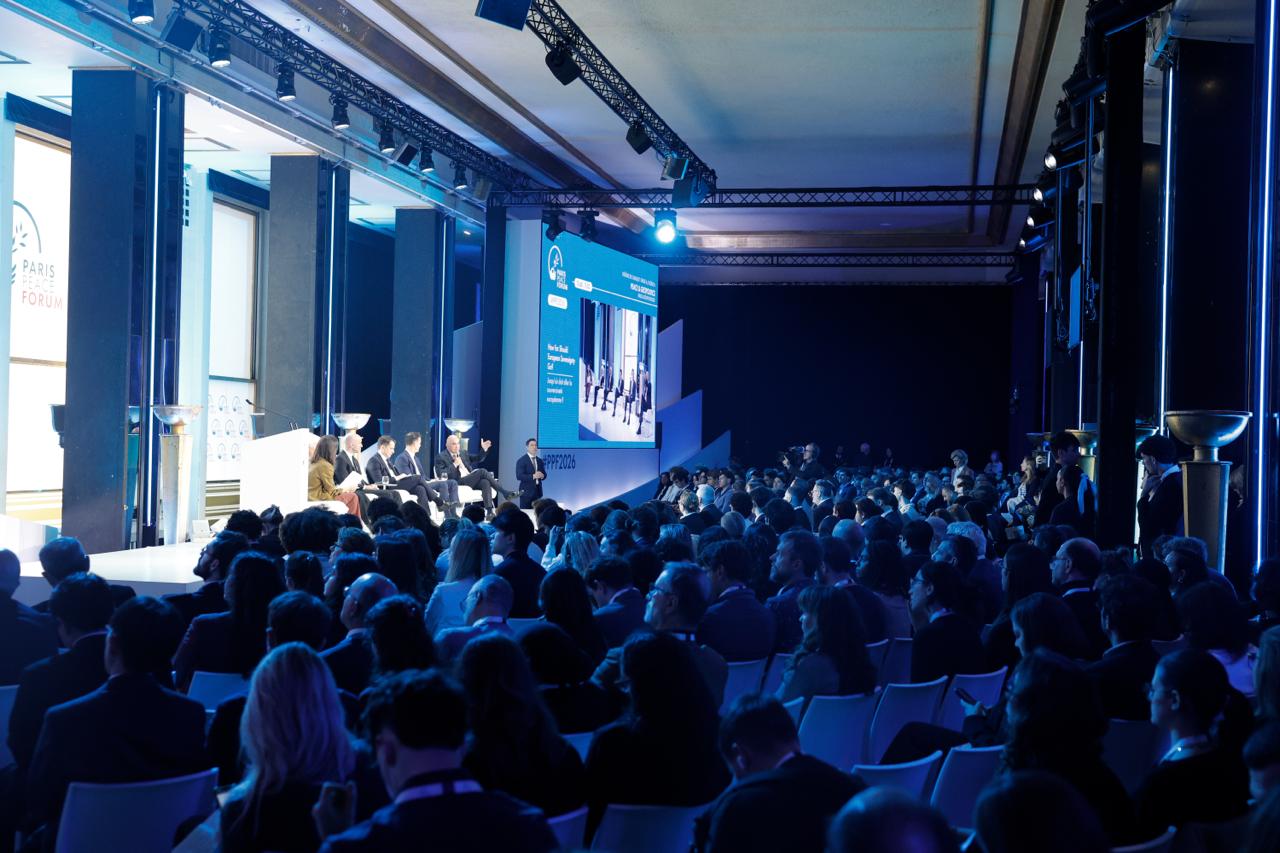
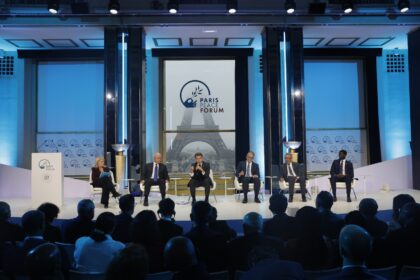
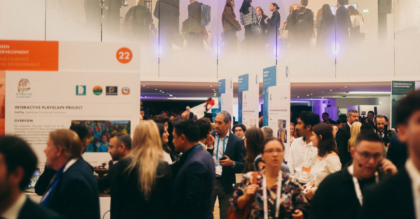
11 November 2026 — With more than 60 active conflicts worldwide, peace seems harder to attain than ever. To foster dialogue among a wide range of actors and stakeholders, the Paris Peace Forum brought together more than 3,500 participants from 98 nationalities at its annual meeting.
Heads of state and governments, representatives from international organizations and the private sector, civil society actors, and youth discussed over two days their role and responsibilities in supporting active dialogue in places like Sudan, Ukraine or Palestine.
David Miliband, President of the International Rescue Committee (IRC), said: “While it's true that Sudan is certainly the largest crisis, we also have to recognize it's a symptom of a syndrome in which hard power is unchallenged, and diplomacy is in retreat”, at the session “Is Peace in Sudan Still Possible? Putting Civilians at the Center of the Process”.
Mariana Betsa, Deputy Minister of Foreign Affairs of Ukraine, stated: “Every single day, just as we speak now, abductions and deportations take place in Ukraine”, at the session “Protecting Ukraine's Children: From Wartime to Return, Justice and Recovery”.
Inger Ashing, Chief Executive Officer of Save the Children International, said: “With this disrupted education, many Ukrainian children have lost their ability to create social relationships. That is one of the biggest concerns that we have, because that is being part of a community”, at the session “Protecting Ukraine's Children: From Wartime to Return, Justice and Recovery”.
Fatima Maiga, Member of the International Network of Francophone Women Mediators, stated: “We have to include young people as the leaders of mediation processes because they are good at communication”, at the session “Building Resilience with a New Generation of Women Peace Mediators”.
Through more than 80 sessions, over 400 speakers covered issues ranging from geopolitics and human rights to development and climate. Artificial intelligence and cybersecurity were also high on the agenda, as the Forum continues its work to ensure that technology serves the public interest.
The Paris Peace Forum puts children’s rights at the heart of the peace agenda
This year’s edition also hosted a landmark Child Summit, positioning the Paris Peace Forum as a key diplomatic event on the international agenda for children’s rights and wellbeing. As Philippe Étienne, President of the Forum, stated during the opening ceremony: “Investing in childhood is investing in peace, it is investing in the future.”
More than 200 volunteers and around 400 students and young professionals representing 54 nationalities took an active part in the Forum, some even as speakers, on November 10 and 11 at the Palais de Chaillot (Musée de l’Homme, Musée national de la Marine, Cité de l'architecture et du patrimoine, and the Théâtre national de la Danse - Chaillot).
Partnering for the future
The Forum also showcased nearly 50 projects offering concrete solutions on a variety of topics, including “Kickstart your Career” focused on AI-skilling for the future of work in Latin America and “The Coastal Compact”, supporting coastal plastic recovery in India. Ten of these projects will take part in the Forum’s 2026-2027 Scale-Up Program where they will receive hand-tailored mentoring for a full year.
As the Forum draws to a close, debates continue with exclusive Q&A sessions featuring prominent French political figures, including Raphaël Glucksmann, a candidate in the 2027 French presidential election, and Dominique de Villepin, former Prime Minister of France.
Although the ninth edition is coming to an end, the Paris Peace Forum’s work is far from over. Throughout the year, the Forum strives to bring diverse actors together, foster dialogue, build coalitions and drive collective action to advance the issues at the heart of its annual event.