


Program
Resilient Transitions
The 2026 Spring Meeting focused more specifically on building a resilient future in a disrupted world, with a program aligned with G7 Summit priorities and mainly focused on the following topics:
- Food Systems
- Child Priority Framework
- Energy and Transition Minerals
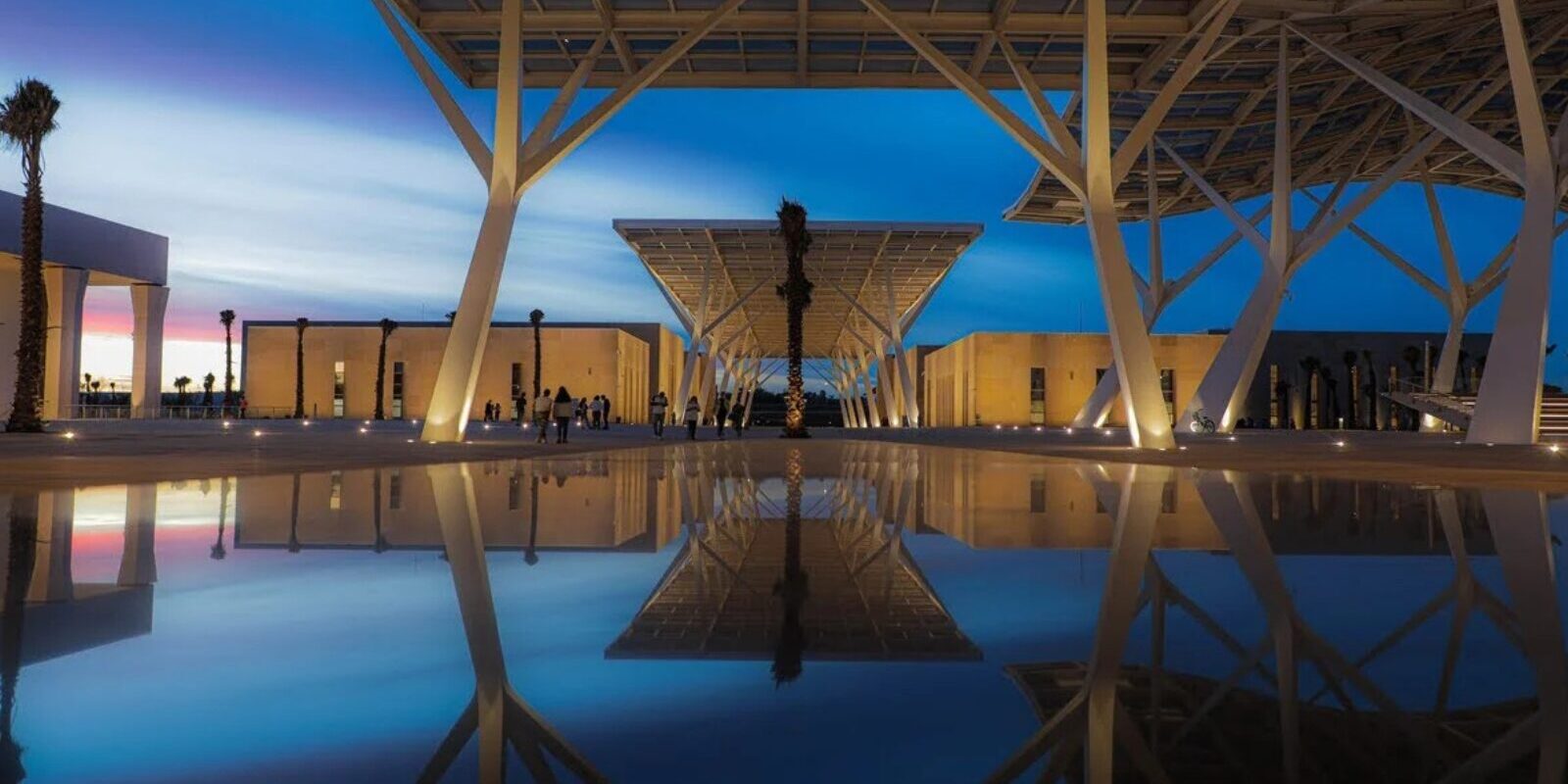
The meeting was held on the campus of University Mohammed VI Polytechnic in Rabat, Morocco, over two days of rich exchanges and collective work. June 4th was dedicated to working sessions, giving participants the opportunity to make progress on each of these topics. June 5th was devoted to plenary sessions, providing a space for sharing and consolidating the advances made the day before.
Thursday June 4th, 2026
Speakers:
Part 1: Opening of the afternoon
- Keynote: HE Leila Benali, Minister for Energy Transition and Sustainable Development, Kingdom of Morocco
- Justin Vaïsse, Founder and Director General, Paris Peace Forum
Part 2: Introduction of the ATLAS-MAVA Forum
- Younes Addou, Vice President Agribusiness & Sustainability Solutions, INNOVX (Group OCP)
- Augustin Grandgeorge, Head of Development Initiatives, Paris Peace Forum
This roundtable is part of the ATLAS MAVA FORUM, a joint initiative bringing together the ATLAS and MAVA platforms to tackle Africa’s agricultural financing coordination challenge, connecting national plans to capital, DFIs to bankable pipelines, and farmers to scalable technology and finance.
Session co-organized with WBG, INNOVX and ATLAS
This session explored how coordinated platforms can help overcome one of the most persistent constraints in African agriculture: translating national strategies, reform agendas, and investment plans into coherent, financeable, and scalable pipelines that mobilize both public and private capital. The discussion placed AgriConnect at the center of this coordination challenge, while also illustrating how partnerships between the World Bank Group and strategic actors—such as OCP—can support its objectives. In this context, initiatives like MAVA provide a concrete example of how public‑private collaboration can help operationalize AgriConnect priorities and move beyond fragmented interventions toward integrated, country‑led financing approaches. AgriConnect is the World Bank Group’s flagship initiative to transform agriculture and agribusiness by integrating policy reform, public investment, advisory support, and private sector finance. It aims to help farmers transition from subsistence to more productive, market-oriented systems, while generating jobs, strengthening food systems, and mobilizing large-scale investment. With a target of improving the livelihoods of 300 million farmers by 2030, AgriConnect focuses on three pillars—strengthening foundations, reforming policies, and mobilizing capital—and operates as a collaborative platform that brings together governments, private sector actors, and development partners to scale impact at country and value chain levels.
The session examined how AgriConnect can function as a country-level coordination framework that effectively aligns policy reforms, public investment, and private sector engagement. It also seeked to identify concrete actions that can be further developed in collaboration with interested stakeholders to enhance agri-finance mobilization and support the scaling of sustainable agricultural investment
Speakers:
Welcome Remarks:
- Anup Jagwani, Director, Farming and Agribusiness, World Bank Group
AgriConnect presentation:
- Chakib Jenane, Regional Practice Director, Planet, West & Central Africa, World Bank Group
Panel 1: Building Foundations for Scale
- Lawrence Haddad, Executive Director, Global Alliance for Improved Nutrition (GAIN)
- Hajar Alafifi, Chief Executive Officer, OCP Africa
- Carl Manlan, Chief Partnerships & Business Development, AGRA
- Alise Dykstra Thomas, Senior Manager, Partnerships & Consulting, PULA
Moderator:
- Patrick Dupoux, Managing Director and Senior Partner, Boston Consulting Group (BCG)
Panel 2: Unlocking Capital & Scaling Solutions
- Emmanuel Marchant,Senior Vice President, Sustainability and Partnerships, General Manager, Danone Ecosystem, Danone
- Younes Addou, Vice President Agribusiness & Sustainability Solutions, INNOVX (Group OCP)
- Hamza Rkha Chaham, Founder & CEO, SOWIT- TAKAMOUL
- Malik Souali, Strategic Advisor, ENABEL
Moderator:
- David Tinel, Country Manager for the Maghreb, International Finance Corporation (IFC)
This roundtable is part of the ATLAS MAVA FORUM, a joint initiative bringing together the ATLAS and MAVA platforms to tackle Africa’s agricultural financing coordination challenge, connecting national plans to capital, DFIs to bankable pipelines, and farmers to scalable technology and finance.
African agriculture faces a stark paradox: a continent holding 60% of the world’s arable land yet struggling with a $200 billion annual financing gap and a deep coordination disconnect that keeps promising innovations trapped at pilot stage. While agri-tech startups, climate-smart practices and digital tools are multiplying across the continent, structural barriers — fragmented ecosystems, misaligned investment pipelines and weak links to national priorities — prevent them from scaling across value chains.
This roundtable brought together decision-makers to bridge that gap. Drawing on the Briter Innovation Report, participants diagnosed the state of African agri-innovation, pinpoint the bottlenecks blocking scale and long-term capital, and define the roles of DFIs, governments, corporates and philanthropies in de-risking solutions. The goal: identify concrete innovation-to-investment pathways that ATLAS can advance in its 2026 work programme — turning ecosystem dynamism into structured, investment-ready pipelines that deliver real impact for farmers and food systems at scale.
Speakers:
- Younes Addou, VP Agribusiness & Sustainability Solutions, InnovX
- Marie-Claire Kalihangabo, Coordinator, Africa Fertilizer Financing Mechanism (AFFM), African Development Bank (AfDB)
- Sandrine Dury, Regional Director for the Mediterranean, Middle East, and Balkan Countries, Centre de coopération internationale en recherche agronomique pour le développement (CIRAD)
- Alise Dykstra Thomas, Senior Manager, Partnerships & Consulting, PULA
- Raphaël Hara, Managing Director, Ksapa
- Maryam Guessous, Responsable de Domseeds, Les Domaines Agricoles
- Aniss Bouraqqadi, Agronomy Director, OCP Nutricrops
- Carl Manlan, Chief Partnerships & Business Development, AGRA
- Meryem Bennis, Upstream Officer FIG Africa, International Finance Corporation (IFC)
- Jihane Ajijti, Africa & Brazil Director, Tourba
- Maryama Hmaidi, Lead Data Scientist, Boston Consulting Group (BCG)
- Bruno Meireles de Sousa, Operating Partner, Bidra Innovation Ventures
- Ali Moutaib, Program Officer of 50×2030 Initiative, World Bank
Moderator:
- David Saunders, Director of Strategy and Growth, Briter
Organised in collaboration with the Mediterranean Action Committee
The two shores of the Mediterranean are now experiencing structural complementarity. On the one hand, Europe is facing growing pressure on its agricultural labor markets: in France alone, France Travail anticipates more than 200,000 new hires in the sector, against a backdrop of accelerated demographic aging and a decline in local workers’ interest in agricultural jobs. On the other, the southern Mediterranean has a young, available, and increasingly skilled workforce. This imbalance presents an opportunity and calls for coordinated policy responses. Indeed, while certain migration corridors already exist (Andalusia alone accounts for more than 93,000 foreign agricultural workers, representing over a third of Spain’s national total), they remain insufficiently expanded and undersized relative to the scale of the need.
Circular seasonal migration schemes therefore emerge as a concrete response to the imbalances in European agricultural labor markets and, more broadly, as a lever for Euro-Mediterranean integration. This panel aimed to examine, based on concrete experiences, seasonal agricultural mobility schemes and the conditions under which they can become a sustainable driver of regional integration (human mobility, economic efficiency, and political and social sustainability). It focused on an emblematic case: the agri-food supply chains linking Morocco, Andalusia, and southern France, as exemplified by the Azura Group. This model, with a logistics hub in Montpellier, production in the Sahara, and Franco-Moroccan joint capital, illustrates how integrated value chains can emerge around labor mobility. Discussions also focused on the social dimension of these networks: relying largely on a female seasonal workforce, they represent a lever for economic empowerment, provided that working conditions live up to this commitment.
Speakers:
- Hakim El Karoui, Founding partner, Volentia ; President & Founder, Action Committee for the Mediterranean
- Katarina Stohrova, First Councellor, Delegation of the European Union in Morocco
- Martin Fortes Delacroix, Regional Coordinator for North Africa, Expertise France
Moderator:
- Marc Reverdin, Secretary-General, Action Committee for the Mediterranean
Africa faces a dual crisis: a $200 billion agricultural financing gap and a hidden hunger epidemic, with 925 million people unable to afford healthy diets and 80% of women in Sub-Saharan Africa deficient in at least one micronutrient. Decades of intensive farming and soil degradation have quietly stripped staple crops of essential nutrients — a crisis largely invisible yet affecting billions.
The solution lies beneath our feet. Agronomic biofortification — improving nutritional quality through better soil health, micronutrient-enriched fertilizers and resilient seed varieties — offers a scalable, cost-effective pathway from soil to health. But scaling it demands coordinated action across the entire value chain, from farmers and researchers to processors, financiers and policymakers.
This roundtable explored how to turn that vision into reality: aligning incentives, structuring partnerships and shifting agriculture’s measure of success from yield alone to nutrition, livelihoods and sustainability.
Speakers:
- Lawrence Haddad, Executive Director, Global Alliance for Improved Nutrition (GAIN)
- Jean Baptiste Boulay, Executive Vice President – Nutrition Solutions BU, OCP Nutricrops
- Aisha Hadejia, Partner, Sahel Consulting
- Mamou Ehui, Executive Director, Global Phosphorus Institute (GPI)
- Francine Picard, Co-founder and Director of Partnerships, Shamba Center
- Dr. Kaushik Majumdar, Director General, African Plant Nutrition Institute (APNI)
- Prof. Lal Rattan, Director, CFAES Rattan Lal Center for Carbon Management and Sequestration
- Tom van Mourik, Global food systems advisor, Helen Keller Intl, Senegal
- Bruno Gerard, Dean of the College of Agriculture and Environmental Sciences, UM6P
- Nail Lazrak, Political Analyst, Organisation for Economic Co-operation and Development (OECD)
Moderators:
- Facundo Etchebehere, Co-founder, Ambition Loop
- Thibaud Aschbacher, Principal, Boston Consulting group (BCG)
Resilient and sustainable transition mineral value chains are central to the energy transition, digital economy and industrial resilience. Yet, current financing frameworks in minerals value chains are not delivering investment at the scale or speed required. The IEA estimates USD 800 billion in mining investment will be needed by 2040 to stay on a 1.5°C pathway, while UNCTAD points to a USD 225 billion shortfall in developing economies alone. This session brought together Members and Special Advisors of the Global Council for Responsible Transition Minerals, government representatives, development banks experts, industry and civil society to tackle the most pressing challenges and solutions to financing responsible minerals value chains. It also provided an opportunity for members of the Global Council’s dedicated Working Group, convened by the Paris Peace Forum, to present and discuss the Council’s recently adopted policy note on financing responsible transition mineral value chains. With the French G7 Presidency placing financing transition minerals value chains at the top of the multilateral agenda ahead of the Evian Summit, this session offered a critical window to align credible financing approaches with resource-rich producing countries expectations.
Speakers:
- Armando Ayala, Head of Just Transition Finance, Southern Transitions
- Assheton Carter, Founder and Executive Director, Fair Cobalt Alliance; Founder and Chairman, TDi Sustainability; Founder and CIO, The Impact Facility
- Bertrand Poche, Deputy Director, Agence française de développement (AFD), Office – Morocco
- Bruno Oberle, Co-chair of the Global Council for Responsible Transition Minerals & President of the World Resource Forum
- Céline Kauffmann, Chief Programmes Officer, Institut du Développement Durable et des Relations Internationales (IDDRI)
- Etienne Sum Wah, Trade Lead, Embassy of Canada to the Kingdom of Morocco
- Glen Mpufane, Member of the Global Council for Responsible Transition Minerals & Executive Director, GM Mining ESG Consulting; Former Director of Mining at IndustriALL Global Union
- Gordon Poole, Founder and Director, Isvern Advisory
- Ilaria Carnevali, Resident Representative of UNDP in the Kingdom of Morocco
- Ma Jun, Founding Director, Institute of Public and Environmental Affairs
- Noémie Benfella, Junior Policy Analyst, Organisation for Economic Co-operation and Development (OECD)
- Vincenzo Conforti, Head of Governmental Affairs, Glencore & Co-Lead of the Paris Peace Forum Working Group on Financing Responsible Transition Minerals
- Benjamin Gallezot, Interministerial Delegate on Strategic Metals and Minerals, Prime Minister’s Office, République française
Moderator:
- Adrien Abecassis, Policy Initiatives Director, Paris Peace Forum
Friday June 5th - Auditorium
Speakers:
- Justin Vaïsse, Founder and Director General, Paris Peace Forum
- Philippe Lalliot, Ambassador of the French Republic to the Kingdom of Morocco
- Hicham El Habti, President, University Mohammed VI Polytechnic (UM6P)
African states, still grappling with the economic aftershocks of the Russia–Ukraine war, are now faced with the additional side effects of the US-Iran war such as spikes in energy prices, trade disruptions, or financial volatility. The suspension of fertilizer supply chains through the Gulf region for instance is dramatically affecting African agribusiness, agrarian smallholder economies and food security.
As geopolitical tensions intensify and conflicts multiply worldwide, security and economic sovereignty are increasingly dominating national and global agendas and budgets. The succession of crises the world is undergoing demonstrates how fundamental building resilience has become. In this context, what space is left for development priorities and fair transitions? Can the momentum behind the 2030 Agenda survive in a world marked by fragmentation, strategic competition and the weakening of international institutions and rules?
This panel explored how Africa can navigate this complex matrix of disruptions, instability and aid cuts in a world marked by intensifying great-power rivalry and regional conflict. It also discussed how cooperation can adapt to these shifting dynamics, how resilience can be built and reinforced, how resources can be mobilized through multilateral efforts and also how African domestic resources mobilization can be accelerated, to face the world’s most crucial challenges and ensure sustainable and resilient development, particularly in Africa.
Speakers:
- Yasmina Asrarguis, Researcher in Geopolitics, Jean-Jaurès Foundation
- Karim El Aynaoui, Executive President, Policy Center for the New South
- Sachin Kumar Sharma, Director General, Research and Information System for Developing Countries (RIS)
- Nathalie Delapalme, Chief Executive Officer, Mo Ibrahim Foundation
Moderator:
- Justin Vaïsse, Founder and Director General, Paris Peace Forum
The panel examined how recent global crises—COVID‑19, the war in Ukraine, and fertilizer market disruptions—have exposed deep structural weaknesses in Africa’s food systems. Despite vast agricultural potential, Africa remains highly dependent on food and fertilizer imports, leaving it vulnerable to external shocks. These crises have highlighted the urgent need for greater food and input self‑sufficiency. At the same time, the shocks have clarified solutions: boosting domestic fertilizer production, reducing import reliance, strengthening regional value chains, and aligning policy, investment, and implementation. With agriculture already employing over 70% of Africa’s population, the continent has the capacity to feed itself and contribute to global food security if properly financed and coordinated. Building on progress made through the ATLAS sessions on financing, innovation and nutrition, the panel focused on accelerating concrete action. Its goal is to turn crisis lessons into coordinated public‑private investment and sustained agricultural transformation across Africa.
Keynote speech
- Ahmed El Bouari, Minister of Agriculture, Maritime Fisheries, Rural Development and Water and Forests, Kingdom of Morocco
Speakers:
- Anup Jagwani, Director, Farming and Agribusiness, World Bank Group (WBG)
- Carl Manlan, Chief, Partnerships and Business Development, AGRA
- Sandra Bartelt, Principal Adviser for G7 and G20 Sustainable Development Agendas, Directorate-General for International Partnerships (INTPA), European Commission
- Younes Addou, Vice President Agribusiness & Sustainability Solutions, INNOVX (Group OCP)
- Amal Benaissa, Director, Sustainability Advocacy, Bank of Africa
Moderator:
- Patrick Dupoux, Managing Director and Senior Partner, Boston Consulting Group (BCG)
In an environment of difficult choices and weighing tradeoffs, investing in children becomes a powerful, unifying lever to foster human development and resilience in the most vulnerable populations. The Child Priority Framework (CPF) aims to elevate child wellbeing across the five pillars of health, education, nutrition, protection, and psycho-social development, as a global development priority. As children represent the most effective and most unifying investment for long-term global stability and prosperity, this panel took stock of progress achieved ahead of the G7 Summit in Evian on the Children’s Agenda.
Part 1:
Speakers:
- Laura Bill, Representative, Morocco, United Nations Children’s Fund (UNICEF)
- Yusra Mardini, Olympic Swimmer, Goodwill Ambassador for the United Nations Office of the High Commissioner for Refugees (UNHCR)
Moderator:
- Trisha Shetty, Founder and President, SheSays ; President of the Steering Committee, Paris Peace Forum
Part 2:
Speakers:
- Asmae Boureddaya, Resident Representative, AUDA-NEPAD
- Sandra Bartelt, Principal Adviser for G7 and G20 Sustainable Development Agendas, Directorate-General for International Partnerships (INTPA), European Commission
- Matteo Maestracci, Global Public Affairs Director, Danone
Moderator:
- Zohreen Badruddin, Policy Manager, Childhood Initiative and International Development Funding, Paris Peace Forum
As demand for Transition Minerals accelerates, producer countries in the Global South sit at the heart of new strategic value chains, yet too often remain at the margins of decision-making. In a context where strategic minerals take an increasing share of multilateral discussion, including with the 2026 French Presidency of the G7, this high-level panel, convened with members of the Global Council for Responsible Transition Minerals, explored how to put the Global South at the center of resilient and sustainable mineral value chains. Bringing together perspectives from governments, industry, and international organizations, speakers discussed how to reconcile security of supply with equitable value creation and the role of South-South cooperation. The conversation looked into pathways for a global architecture of shared governance for transition minerals.
Speakers:
- Glen Mpufane, Member of the Global Council for Responsible Transition Minerals ; Executive Director, GM Mining ESG Consulting
- Bruno Oberle, President, World Resource Forum Association (WRF)
- Ma Jun, Founding Director, Institute of Public and Environmental Affairs
- Amine Houssaim, Chief Executive Officer, InnovX
- Adil Chikhi, Regional Director, Head of Corporates for Africa, European Bank for Reconstruction and Development (EBRD)
Moderator:
- Céline Kauffmann, Chief Programmes Officer, Institut du Développement Durable et des Relations Internationales (IDDRI)
In the wake of Resilient Transitions, and Rabat’s UNESCO designation as the 2026 World Book Capital, this session explored the role of imaginaries as vectors of freedom and cultural emancipation, as well as the modalities of their circulation, transmission, and collective development with young people. Organized at the heart of a university of excellence, panelists highlighted how collective narratives, cultural and creative industries, and spaces for dialogue contribute to shaping more open, innovative, and inclusive societies. The discussion examined the dynamics enabling youth to reclaim, produce, and circulate their own narratives in a world marked by profound transformations and a growing global connectivity. By bringing together academic, cultural, and institutional actors, the session analyzed how the emergence of new collective imaginaries, in line with the aspirations of a youth facing polycrisis, participates in ongoing intellectual, symbolic, and cultural transitions.
Speakers:
- Lazare Eloundou Assomo, Assistant Director General for Culture a.i. and Director of the World Heritage Centre, UNESCO (Video)
- Hajar Azell Chokairi, Writer and cultural entrepreneur
- Rabiaa Marhouch, Editor, Writer and Academic
- Fatiha El Moudni, Mayor, City of Rabat
Moderator:
- Khalid Chegraoui, Vice-Dean International Relations, Mohammed VI Polytechnic University (UM6P), Faculty of Governance, Economics, and Social Sciences (FGSES)
Speakers :
- Trisha Shetty, Founder and President, SheSays; President of the Steering Committee, Paris Peace Forum
- Justin Vaïsse, Founder and Director General, Paris Peace Forum
- Hicham El Habti, President, University Mohammed VI Polytechnic (UM6P)