Paris Peace Forum 2026 | 10-11 Nov.
D-72
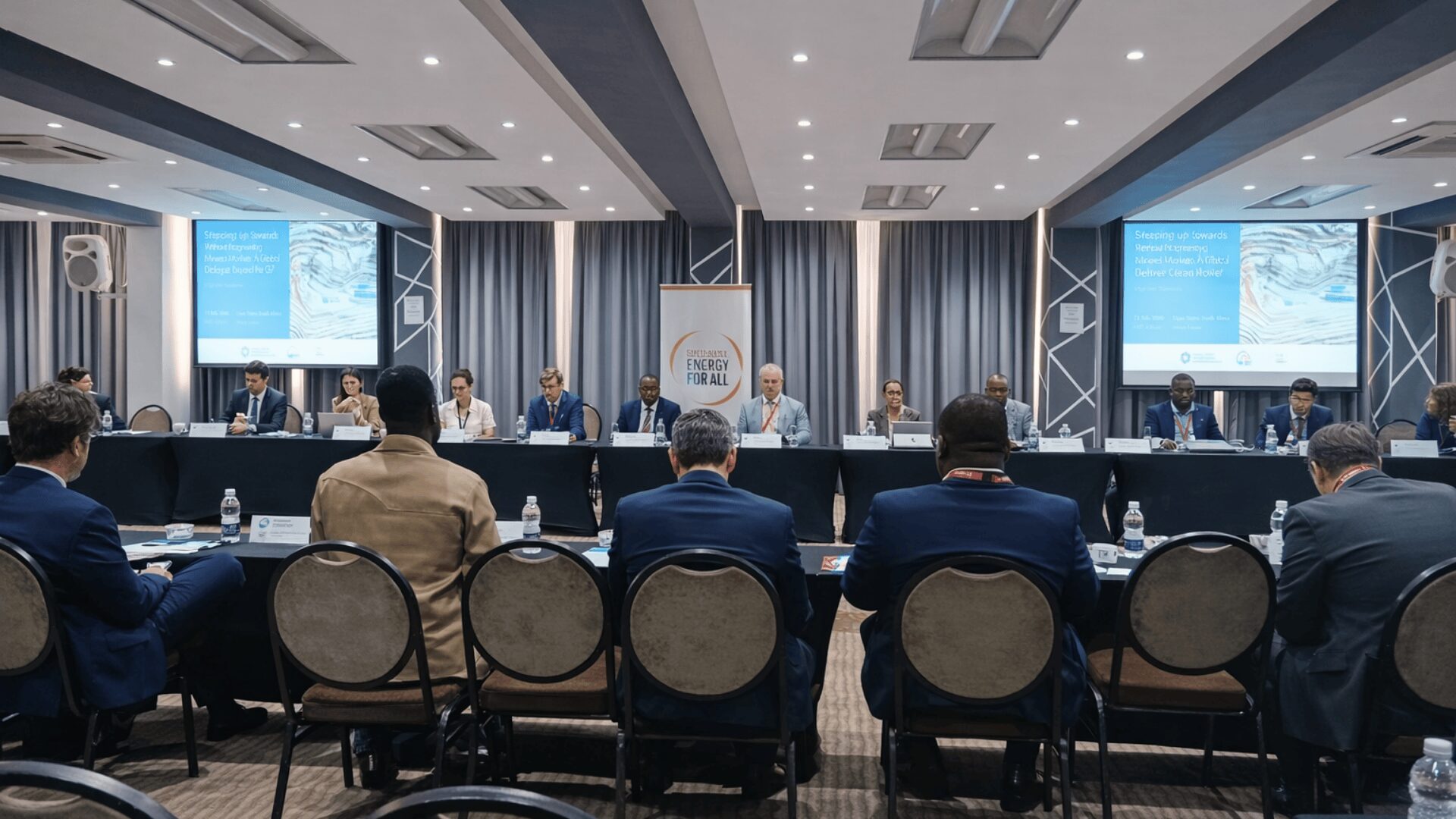
Paris, February 26th, 2026 – On the sidelines of Mining Indaba 2026 in Cape Town, representatives from African mining countries, G7 governments, industry, and civil society engaged in high-level dialogue to ensure that sustainability requirements in transition mineral supply chains upheld high environmental and social practices without becoming tools for excluding emerging African economies and small producers.
At Mining Indaba, the world's largest event dedicated to the capitalization and development of mining interests in Africa, the Paris Peace Forum’s Global Council for Responsible Transition Minerals co-organized, with Sustainable Energy for All, a roundtable discussion entitled “Ensuring High Standards Without Fragmenting Markets: A Global Dialogue Beyond the G7.” The conclusions of this roundtable will directly feed into the work ahead of the French Presidency of the G7, which has included transition minerals as one of its key priorities.
“Critical minerals will be one of the central themes of the French G7 this year. The importance of these resources for industrial development and the energy transition is undeniable — as are the growing geopolitical and trade constraints in this sector”, stated Benjamin Gallezot, France's Interministerial Delegate for Strategic Minerals and Metals Supplies.
The challenge is to ensure that the conditionality of minerals do not become a de facto mechanism that exclude African emerging economies, small producers and artisanal and small-scale miners due to a lack of financial, regulatory, or institutional capacity.
Towards a two-tier system?
A consensus emerged during the discussions: if they are designed without the involvement of mining countries, the standards and requirements for traceability, transparency, and ESG standards imposed on them risk fragmenting markets rather than structuring them.
Speaking on behalf of Botswana Minister Bogolo Kenewendo, Botswana Geoscience Institute CEO Olefile Cisco Mashabila emphasized the risk that standards developed without the involvement of mineral-rich countries could create a de facto two-tier system that excludes Africa from markets.
Standards: between social protection and industrial pragmatism
Several civil society organizations and trade unions, including Glen Mpufane (member of the Global Council for Responsible Transition Minerals) emphasized that the urgent need to secure mineral supplies should not come at the expense of social protection and warned against the risk of a “race to the bottom” in a context of growing demand.
For their part, industry representatives called for a pragmatic approach. They stressed the importance of strengthening the enforcement of mining codes and regulatory implementation and recognizing progress rather than striving for perfection. "We shouldn't use standards as a geopolitical weapon. Standards are what unite us, whether it's the U.S., Europe, or Africa”, emphasized Vincenzo Conforti, Head of Government Relations at Glencore.
A proposal for inclusive standards
The discussions highlighted a general agreement on the need to strengthen institutional capacity and governance in producing countries. Participants called for:
For media enquiries, please contact : media@parispeaceforum.org
About the Global Council for Responsible Transition Minerals: Launched by the Paris Peace Forum, the Council is an independent, high-level, multi-stakeholder initiative that leverages the experience and influence of its members to advocate for a collaborative global mineral governance approach, anchored in the achievement of climate goals and development priorities. Find out more here transition-minerals.parispeaceforum.org.
In November 2024, the Global Council published a report with 7 key recommendations to enhance global coordination, sustainable operations, value creation and accelerated responsible investments. Following the Canadian G7 Critical Minerals Action Plan and Standards-based market Roadmap (June and October 2025), the Global Council released a Position Paper advocating for upholding high standards without fragmenting global markets. Read the Position Paper here.
About the Paris Peace Forum: The Forum is a platform to originate, shape & share multi-actor responses towards global peace & sustainable prosperity. By convening key decision-makers and fostering collaboration between governments, international organizations, businesses, and civil society, we ensure that diplomacy is not just discussed but reinvented to meet the demands of a changing world. For more information, visit parispeaceforum.org.