Paris Peace Forum 2026 | 10-11 Nov.
D-34
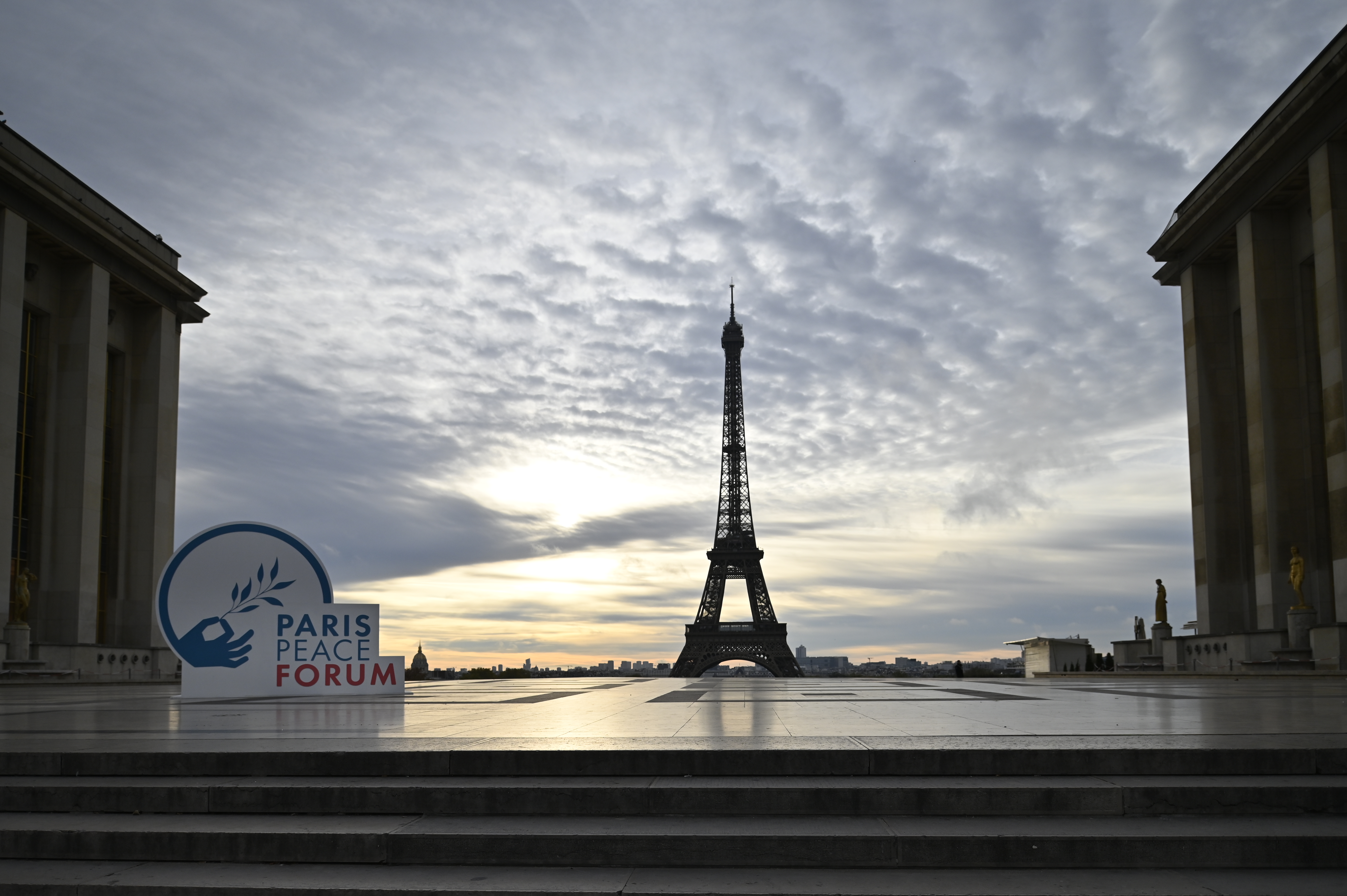
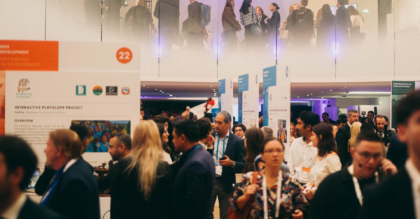
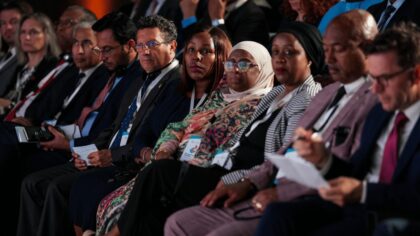
Paris, October 29, 2025 – Day one of this year’s Paris Peace Forum has come to a close, with 10 heads of state and government, ministers from 21 countries and 3500 attendees coming together for over 40 sessions at the historic Palais de Chaillot. The Forum has seen concrete announcements of €10 million in funding from France in support of independent media, a strong declaration from leaders of both the North and South to act on methane emissions and coal, and a striking announcement about former High Commissioner for Human Rights (and former Chilean President) Michelle Bachelet’s candidacy to become the next Secretary General of the United Nations.
New Coalitions for the Planet
A series of panels and roundtables were held on climate change issues on the occasion of the 10th anniversary of the Paris Agreement, and in the lead-up to COP30 in Brazil, featuring speakers including 5 former and one current COP President (Manuel Pulgar-Vidal, Laurent Fabius, Salaheddine Mezouar, Michał Kurtyka, Mukhtar Babayev and André Aranha Corrêa do Lago), as well as Barbados Prime Minister Mia Mottley, French President Emmanuel Macron, French Ecological Transition Minister Monique Barbut and many others. There was notably broad agreement on concrete steps to reduce methane emissions from the energy sector and accelerating the phase-out of coal. “I am pleased that France, Brazil, China and others will, I believe, raise this issue of methane very clearly during the summit on 6 November and throughout the rest of the COP”, stated Ambassador Corrêa do Lago. “On 3 November, Mr Babayev and I will present a report on how to reach $1.3 trillion per year”, he added.
New Coalitions for the People
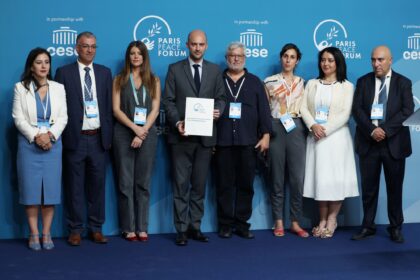
The Forum also hosted the high-level political segment of the International Conference on Information Integrity and Independent Media (IFPIM-FID), with speakers including Nobel Peace Prize laureate Maria Ressa, Reporters Without Borders Director General Thibaut Bruttin and French Minister of Europe and Foreign Affairs Jean-Noël Barrot. A collective political declaration was announced by Minister Barrot and adopted by 29 states during this session – all of which agreed on committing to an enhanced multilateral action and increasing resources to promote reliable information and counter manipulation and propaganda (including through support for IFPIM). French President Emmanuel Macron then announced France is renewing its support for IFPIM with a new contribution of €10 million.
New Coalitions for Peace
In exploring ways for the UN to enhance and adapt its mission of peace, while preserving its legitimacy, the Forum continued to focus on women’s leadership, with former High Commissioner for Human Rights Michelle Bachelet announcing her candidacy to become the next Secretary General of the United Nations. Other sessions focused on peace in the Middle East, particularly the Two State solution, with former Prime minister of Israel Ehud Olmert stating the necessity of having a Palestinian-run government to control Gaza. "Gaza is part of Palestine, not Israel”, he noted. Former Minister of Foreign Affairs of Palestine Nasser Al-Qidwa added that “any Palestinian land will be governed by Palestinians only”, agreeing that “there is no alternative to the two-state solution”. Issues as varied as the war in Ukraine, AI, development aid reform and the future of international cooperation (including Ghanaian President John Dramani Mahama and Barbados Prime Minister Mia Mottley), food security, championing women in politics, diplomacy in a divided world (with Albania Prime Minister Edi Rama), leadership at a crossroads (with Armenia Prime Minister Nikol Pashinyan), and building a resilient digital future (with former New Zealand Prime Minister Jacinda Ardern), were also addressed – including a pledge from OpenAI to further advance AI safety with new models.
“We’re committed to our mission: to reinvent diplomacy in a changing world. This year, more than ever we need to build new coalitions for peace, people and the planet,” said Justin Vaïsse, Founder and Director-General of the Paris Peace Forum.
The Forum will continue Thursday 30 October, with sessions on peace and regional integration in Israel-Palestine and the Great Lakes, more on information integrity, and the announcement of the 10 Scale-Up projects selected by the Forum this year to be supported throughout 2026.
For media enquiries, please contact media@parispeaceforum.org
About the Paris Peace Forum: The Forum is a platform to originate, shape & share multi-actor responses towards global peace & sustainable prosperity. By convening key decision-makers and fostering collaboration between governments, international organizations, businesses, and civil society, we ensure that diplomacy is not just discussed but reinvented to meet the demands of a changing world. For more information, visit parispeaceforum.org.
About the Musée de l’Homme: the Musée de l'Homme traces the evolution of humanity from prehistory to the present day. It offers visitors a journey through three questions: “Who are we?”, “Where do we come from?” and “Where are we going?” based on the results of research conducted by the museum's scientists. It houses remarkable prehistoric and anthropological collections displayed within its historic walls. Since reopening after renovation just ten years ago, the museum has tackled major social issues through its temporary exhibitions and dynamic cultural programming.
About the Musée National de la Marine: the Musée National de la Marine (National Maritime Museum) has one of the finest and oldest collections in the world, tracing more than 250 years of maritime and naval adventures. Under the supervision of the Ministry of the Armed Forces, it is a place of art and history, science and technology, human adventure and popular traditions, also committed to the major maritime issues of the 21st century. The National Maritime Museum is a network of museums located in five cities in France: Paris (Palais de Chaillot – Trocadéro), Brest, Port-Louis (Morbihan), Rochefort, and Toulon. This network structure enables it to maintain strong links with local maritime cultures and to promote an active policy of exhibitions and events, making this institution a living space for raising awareness of the challenges of the sea yesterday, today, and tomorrow.
About the Cité de l'Architecture et du Patrimoine: the Cité de l'Architecture et du Patrimoine is the custodian of an exceptional heritage that bears witness to changes in architecture and territories, and whose national collections, established by Viollet-le-Duc, cover 1,000 years of French architectural history.