Paris Peace Forum 2026 | 10-11 Nov.
D-34
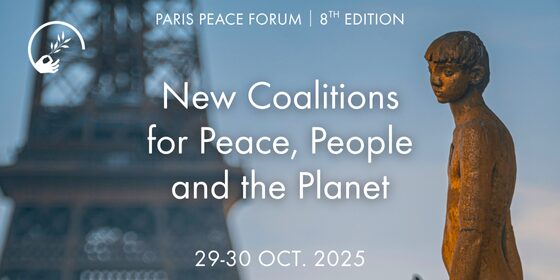
Paris, October 9, 2025 – With just 21 days to go until the next Paris Peace Forum, we're announcing some great new stars for this year's edition: leaders from government, international organizations, business, civil society, and academia, representing both the Global North and the Global South.
The 2025 Forum will take place in the face of ongoing conflicts in Ukraine, Gaza, and Sudan, as well as the worsening climate emergency, the rapid rise of artificial intelligence and falling aid budgets that threaten the lives and livelihoods of millions. Since 2018, the Paris Peace Forum has sought to reinvent diplomacy a changing world and work towards better global governance of public goods – and its mission is more relevant than ever this year, with its 8th edition, at the Palais de Chaillot on 29-30 October under the theme “New Coalitions for Peace, People and the Planet.”
Newly confirmed high-level participants include:
They join an expanding roster of global figures set to address urgent priorities including conflict prevention and peacebuilding, defending democracy and information integrity, investing in children as a driver of development, harnessing AI for peace and inclusive growth, and scaling transformative climate solutions. The Forum will also mark the 10th anniversary of the Paris Agreement, a timely moment to inject fresh momentum into climate action ahead of COP30 in Belém.
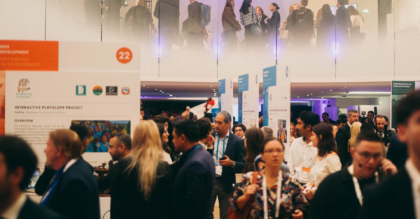
The Forum will be hosted across three iconic venues overlooking the Eiffel Tower: the Musée de l’Homme, the Musée National de la Marine and the Cité de l’Architecture et du Patrimoine, and will convene more than 300 high-level participants and thousands of attendees.
To request media accreditation for this year’s Forum, please fill in this form.
Note that confirmation is not automatically granted and will depend on space and demand, and also that no financial support is available to cover travel costs.
For media enquiries, please contact media@parispeaceforum.org
About the Paris Peace Forum: The Forum is a platform to originate, shape & share multi-actor responses towards global peace & sustainable prosperity. By convening key decision-makers and fostering collaboration between governments, international organizations, businesses, and civil society, we ensure that diplomacy is not just discussed but reinvented to meet the demands of a changing world. For more information, visit parispeaceforum.org.
About the Musée de l’Homme: the Musée de l'Homme traces the evolution of humanity from prehistory to the present day. It offers visitors a journey through three questions: “Who are we?”, “Where do we come from?” and “Where are we going?” based on the results of research conducted by the museum's scientists. It houses remarkable prehistoric and anthropological collections displayed within its historic walls. Since reopening after renovation just ten years ago, the museum has tackled major social issues through its temporary exhibitions and dynamic cultural programming.
About the Musée National de la Marine: the Musée National de la Marine (National Maritime Museum) has one of the finest and oldest collections in the world, tracing more than 250 years of maritime and naval adventures. Under the supervision of the Ministry of the Armed Forces, it is a place of art and history, science and technology, human adventure and popular traditions, also committed to the major maritime issues of the 21st century. The National Maritime Museum is a network of museums located in five cities in France: Paris (Palais de Chaillot – Trocadéro), Brest, Port-Louis (Morbihan), Rochefort, and Toulon. This network structure enables it to maintain strong links with local maritime cultures and to promote an active policy of exhibitions and events, making this institution a living space for raising awareness of the challenges of the sea yesterday, today, and tomorrow.
About the Cité de l'Architecture et du Patrimoine: the Cité de l'Architecture et du Patrimoine is the custodian of an exceptional heritage that bears witness to changes in architecture and territories, and whose national collections, established by Viollet-le-Duc, cover 1,000 years of French architectural history.